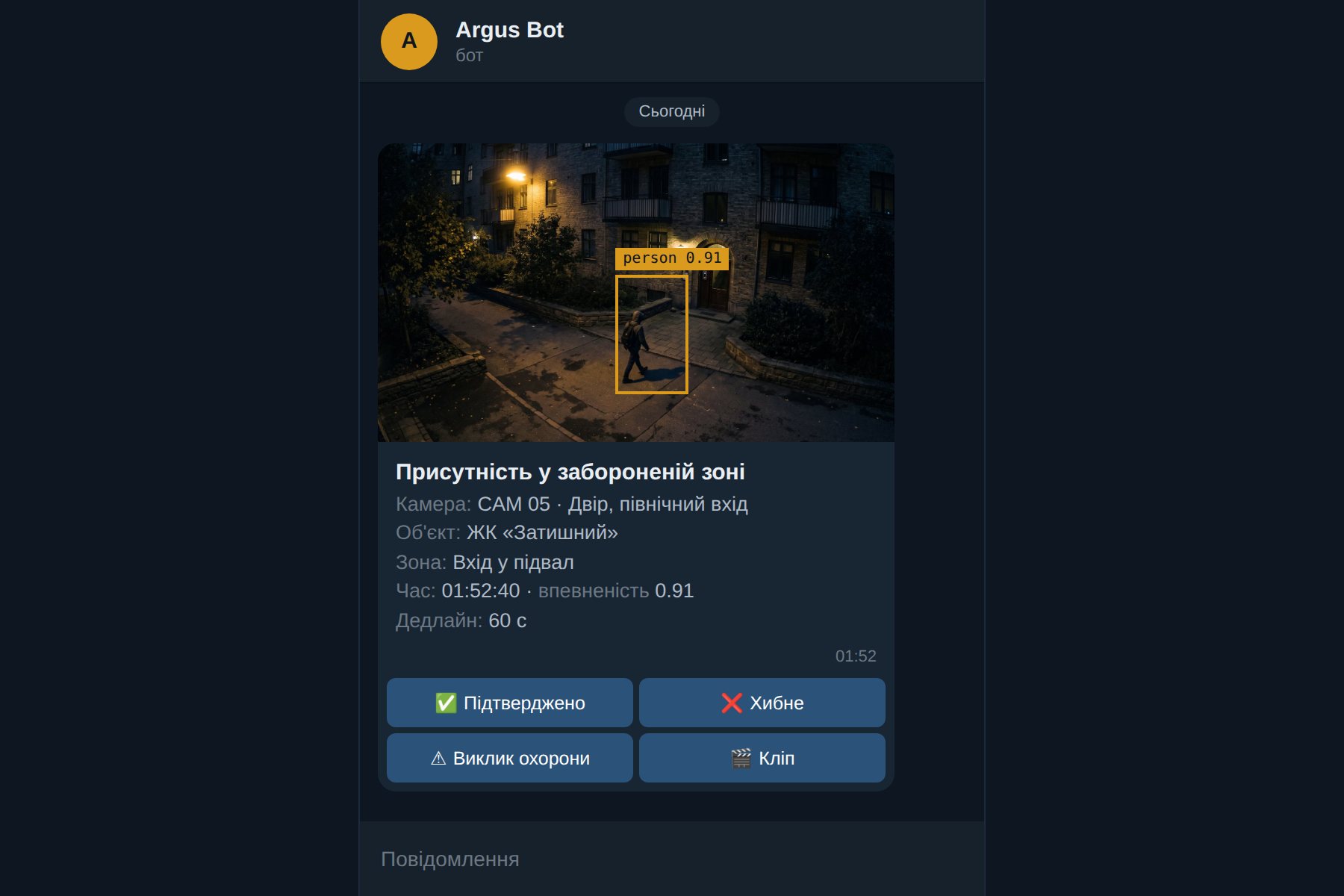
Telegram bot
A photo and a clip that plays right in the chat: class, camera, zone, time. Three languages. Clients see only operator-confirmed events.
We connect to the RTSP cameras you already have. No new hardware, no third-party cloud.
ARGUS builds AI solutions for analysing and managing physical processes in the real world.
We analyse how people behave, how equipment runs and how vehicles move: the system understands events in a monitored area and turns data into concrete action.
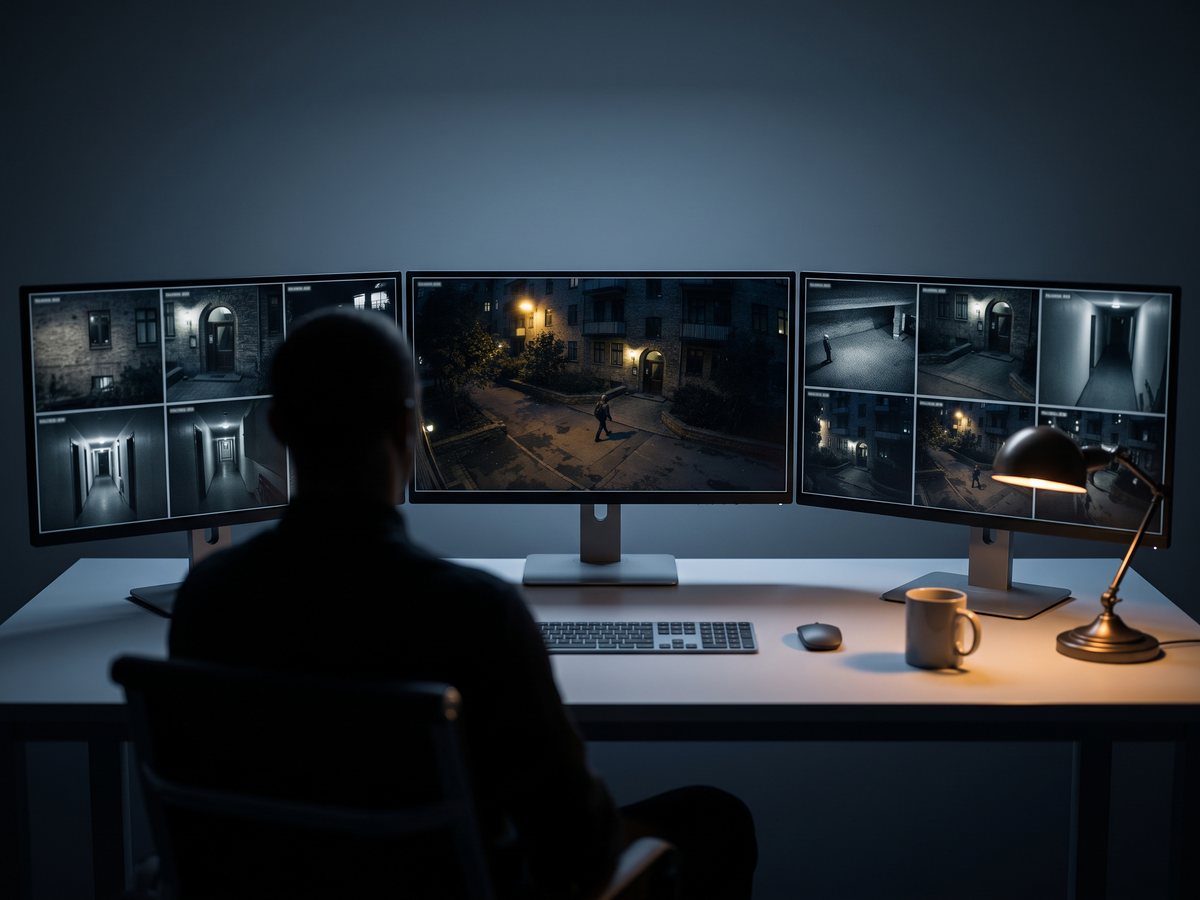
Our mission is to make the physical world observable, analysable and manageable with artificial intelligence.
Our first product is Argus 2.0: an AI monitoring system for live video, built on our own detection model, Neo.
A person at a monitor loses attention after 20 minutes.
With 50 cameras you cannot watch every window at once.
Incidents get noticed after they are over.
Argus flips the logic: the system finds the event and brings a person to it.
Neo detects four classes today. Five more come with upcoming updates.
knife 0.87KnifeThreatslivegun 0.91FirearmThreatslivefall 0.93Person fallingBehaviourlivefight 0.78FightBehaviourcoming soonperson 0.71Presence in a restricted zoneBehaviourlivefire 0.84FireFire safetycoming soonsmoke 0.76SmokeFire safetycoming soonno_helmet 0.81Missing hard hatWorkplace safetycoming soonno_vest 0.79Missing safety vestWorkplace safetycoming soonPPE violations only count where a hard hat and vest are mandatory.
Any IP camera or recorder with an RTSP stream. Nothing changes in your existing setup.
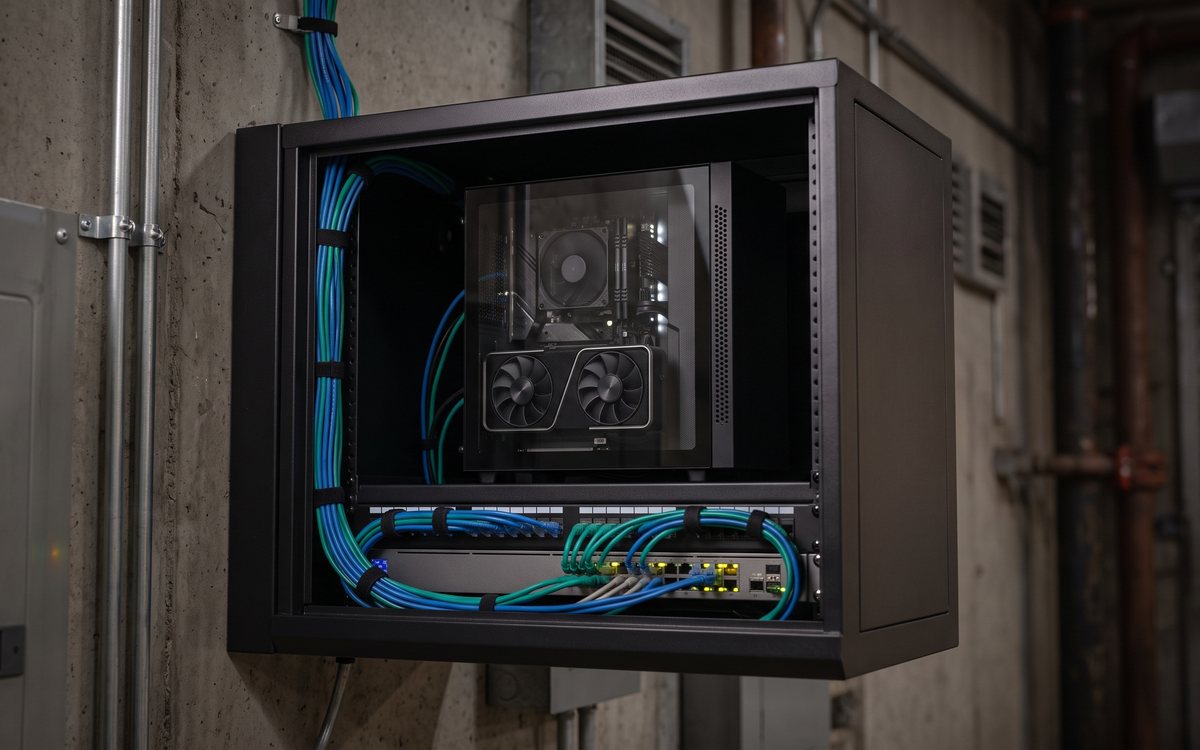
The Neo model runs on a GPU computer at your site. One node handles dozens of cameras.
A snapshot with a box, a short clip, camera, zone, time. In Telegram, in the web console, on the operator's desk.
Typical neural networks mistake a phone for a pistol and headlights for fire. Neo is built for street cameras: real angles, poor lighting, long range.
| Typical off-the-shelf model | Neo | |
|---|---|---|
| False alarms per 100 threat-free frames | 33.8 | 2.0 |
| Share of real threats detected | 78% | 92% |
| Average confidence on correct detections | 0.72 | 0.81 |
| Processing speed, frames/s | 18.6 | 27.8 |
| Stable detection run on real video | 0.8 s | 10 s |
Measured on an internal control set. Results on a site depend on angles and camera quality.
Neo is not a frozen out-of-the-box model. Operators give one-click verdicts, Neo takes your cameras and lighting into account — and works better than on day one.
weapon 0.41typical off-the-shelf model — 0.8-second flashesweapon 0.86Neo — a stable run of up to 10 secondsA photo and a clip that plays right in the chat: class, camera, zone, time. Three languages. Clients see only operator-confirmed events.
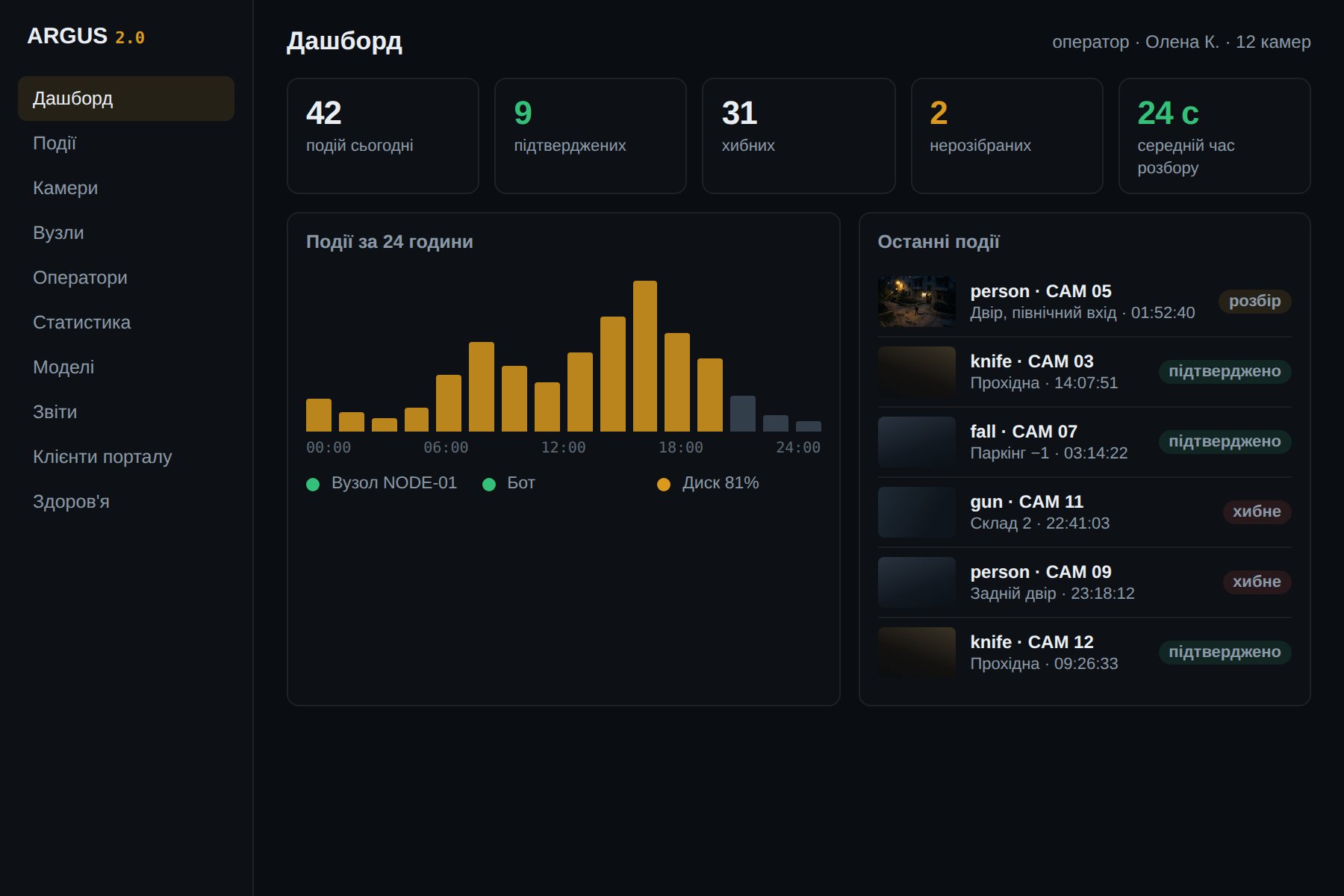
Event feed, live camera view on click, statistics with a heatmap, zone editor, audit log. Works on a phone.
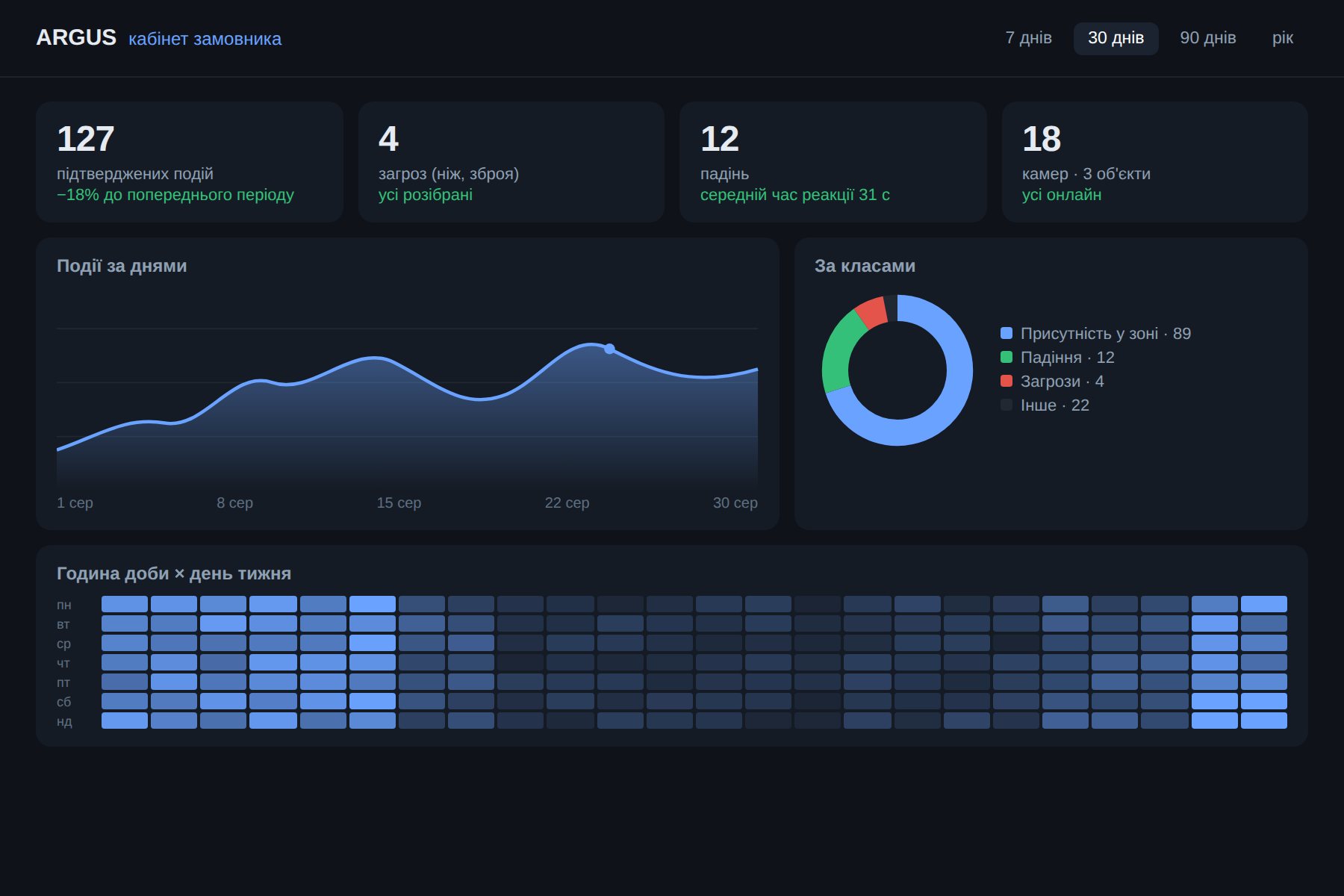
A read-only console: charts and a feed of confirmed events for the client's own cameras.
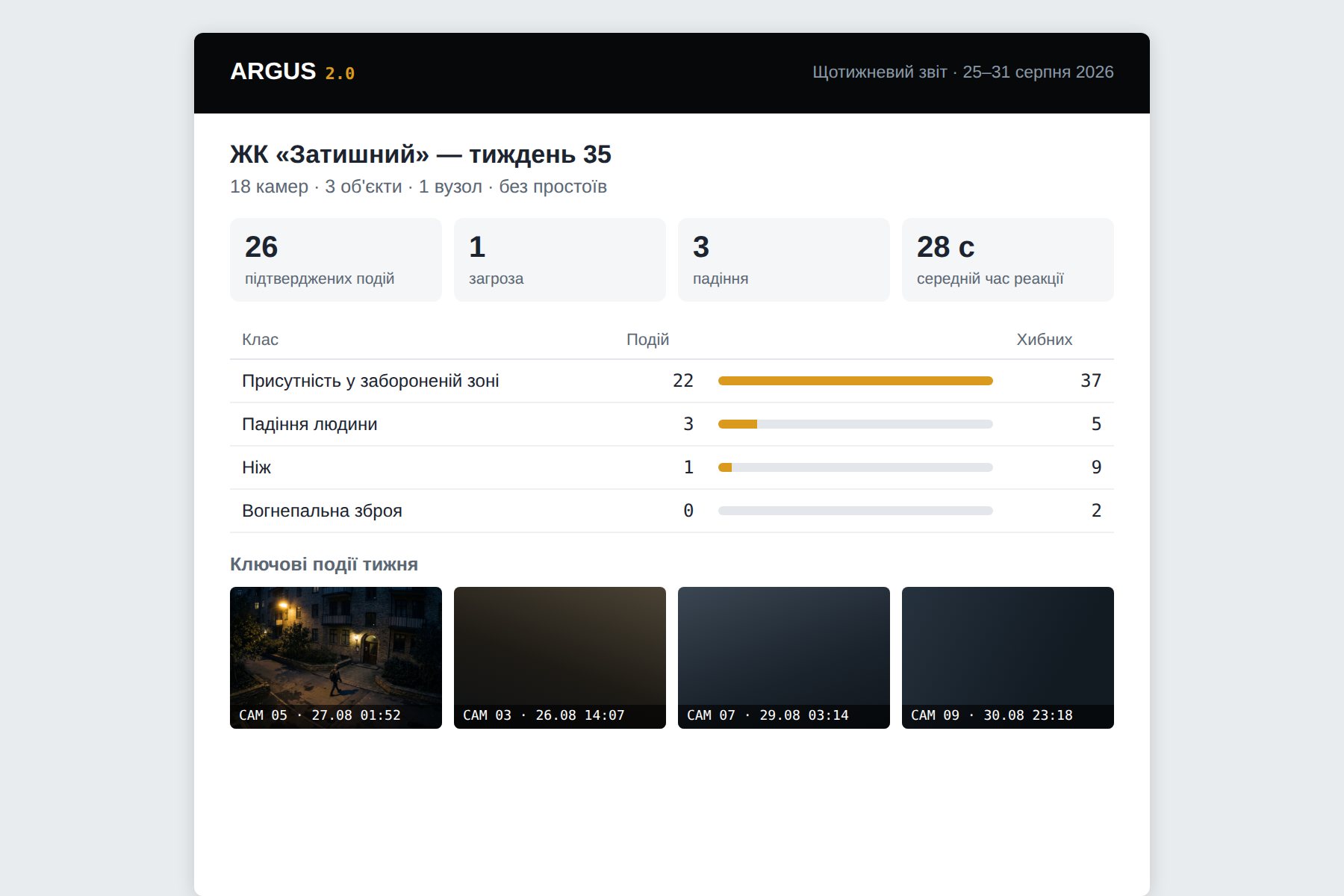
Weekly or monthly: charts, a summary by class and snapshots of key events.
We only promise what already works. Here is what is in development.
We review cameras, angles and lighting, and pick the classes that fit.
A node, 5–20 cameras, zones and thresholds. Real events, seen first-hand.
We collect operator verdicts and adapt Neo to your cameras.
All cameras, operators, Telegram for clients, reports for management.
Start with 10 cameras for two weeks. If false alarms outnumber useful events, you lose nothing.
Request a pilotArgus connects to your cameras alongside the archive and changes nothing in it. We do not replace surveillance; we add attention to it.
Analysis runs locally and does not stop. Undelivered events are queued and sent once the connection is back.
That is why every event passes seven layers of filtering. The result: 2.0 false alarms per 100 frames versus 33.8 for a typical model.
Video never leaves the site: only a snapshot and a short clip go out. No third-party clouds, no inbound ports.
Telegram is enough for an operator: the event arrives on its own, the verdict is one button. The web console takes one shift to learn.
Yes. Neo works on IR imagery with a separate night threshold profile — the night shift is exactly the time this system exists for.
Leave a request — we reply within one business day.
Faster than the form — message us directly.
Contact details are added at publication (file js/config.js).